Holes's 2013 Y-DNA false match
I'll Be Gone in the DarkHoles's 2013 Y-DNA false match was a promising investigative lead that collapsed when Paul Holes learned that another person had uploaded the same killer’s DNA profile. The episode shows both the appeal and the limits of genealogical searching: a striking match can sharpen a cold-case investigation, but a matching entry is not necessarily an independent biological clue. In the unfinished account preserved by Michelle McNamara, the apparent breakthrough briefly seemed to offer a way out of a case that had occupied Holes for years, before the database result revealed a different kind of coincidence.
The case behind the search
The lead emerged from Holes’s continuing effort to identify the East Area Rapist. Although he had boxed the case materials and sent them to Larry Pool in Orange County, the unsolved crimes remained an active concern. By 2013, Holes was chief of a crime lab and anticipating a move into full-time cold-case investigation at a district attorney’s office. The East Area Rapist case threatened to follow him there: he made spreadsheets, and what might have been leisurely drives became regular tours of crime scenes. The account links that persistence to the damage the crimes had left across victims, families, investigators, and their personal lives, as well as the time and resources spent pursuing an unidentified offender.
The case also represented a narrowing window for the people who had worked on it. The first generation of investigators was experiencing health problems, while a later generation that had handled the case when time allowed was approaching retirement. Holes’s return to the evidence was therefore not simply a technical exercise. The unresolved case and the passage of time gave each possible lead urgency, even as the record warned against treating urgency as proof.
How the apparent match appeared
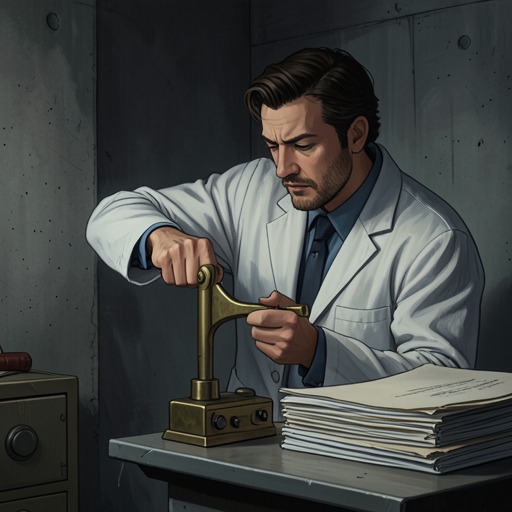
Holes had generated a Y-DNA profile from the East Area Rapist’s DNA, isolating the offender’s paternal lineage. He periodically entered its markers into genealogical websites, which returned surnames associated with possible shared ancestry. The profile could include between twelve and 111 markers. Most results were at a genetic distance of one, a level that offered little immediate help in finding a close relative. Holes kept expectations low and used the searches partly as a way to keep working on the case.
In mid-March 2013, a familiar sequence produced an unfamiliar name at the top of the results. The East Area Rapist had an extremely rare marker, found in only about two percent of the world’s population. The profile attached to the leading name carried that marker and matched eleven other markers from the offender’s profile. The database reported a genetic distance of zero, a result Holes had never seen in his searches. The combination made the entry look markedly different from the routine near-matches and gave the result its force.
Holes first considered calling Ken Clark, a Sacramento County Sheriff’s detective with whom he spoke frequently, but hung up before dialing. Instead, he took his car keys and drove toward Sacramento, about an hour from his office in Martinez. He was headed for the place where the investigation had begun thirty-six years earlier. The decision conveys how quickly the database result moved from a line on a screen to a potential investigative turning point.
The reversal and its meaning
The apparent match did not identify a close paternal relative. A retired Secret Service agent and amateur sleuth named Russ Oase had anonymously entered the East Area Rapist’s markers into the same database. Holes and Oase had therefore uploaded the same killer’s profile independently. The system returned a perfect match because the two entries represented the same DNA source, not because Holes had found a second person genetically connected to the offender. The match was a mirror image of the original profile, not the kinship lead it first appeared to be.
That distinction separates the numerical result from what it can establish. Zero genetic distance was real as a comparison between the two submitted profiles, but the result’s significance depended on the profiles’ provenance. Without knowing that both entries came from the same crime-scene DNA, the matching markers seemed to point toward a person or family worth investigating. The correction did not invalidate the East Area Rapist’s profile; it changed what the database result meant. A precise match could be misleading when two records were not independent evidence.
A method with promise and limits
The episode sits within a wider search for ways to make DNA useful when ordinary investigative paths had stalled. Holes considered ancestral DNA a tool rather than a certainty, while recognizing concerns about quality assurance and privacy. Y-DNA searching offered a route to surnames and possible shared ancestors, but the results depended on who had contributed profiles and what those entries represented. The false match demonstrates a basic limitation of searching a volunteer genealogy database: apparent confirmation may arise from duplicate submissions rather than from a newly discovered family connection.
The book places this uncertainty beside other forms of DNA work without equating their outcomes. In 1996, Mary Hong found that the DNA profiles from the Harrington and Witthuhn cases matched, then noticed that Janelle Cruz’s profile matched them as well. In a separate investigation, DNA evidence eliminated Mike Martinez as a suspect in Cruz’s murder. Such comparisons could connect cases or rule out a person; Holes’s 2013 result, by contrast, seemed to open a new path but ultimately disclosed that the same profile had been entered twice. Together, these examples emphasize that a genetic match or exclusion gains meaning from how the sample and comparison were obtained.
Michelle McNamara preserved the episode in a half-finished section titled Sacramento, 2013. Its unfinished state leaves the anticipated punchline attached to the moment of false recognition: after years of waiting for a technological route into the case, Holes encountered a result that looked conclusive before its origin undid the apparent discovery. The episode neither solves the case nor identifies a suspect. It records how a powerful investigative tool can produce a compelling lead while also requiring careful scrutiny of the evidence behind the match.